
%20(1)_edited.png)
Illinois Land Improvement Contractors Association, Inc.
News

Dramatic Surge in Water Demand Predicted by 2040 Puts Farmers & Industry on Collision Course
Deep inside a report on the future of water in central Ohio is this warning: Industrial demands for water will skyrocket at the same time experts expect farmers will need to regularly irrigate their fields during the critical growing period of July through September.

Effectiveness of Saturated Buffers on Water Pollutant Reduction from Agricultural Drainage
This review clearly demonstrates the value of saturated buffers as an effective practice in reducing nitrate-nitrogen loads from subsurface drainage discharge. A summary analysis of nitrogen removal performance as well as cost-effectiveness is provided.

Legislation Introduced to Significantly Increase OSHA Penalties
Rep. Bobby Scott (D-VA) has introduced the “Lets Protect Workers Act” which would increase penalties on employers that violate federal labor and employment law. Specifically, the bill would 1) significantly increase the civil penalties for violations of OSHA standards, and 2) resurrect OSHA’s “Volks” rule by extending the period during which OSHA can issue a citation for injury and illness recordkeeping violations.

Action on Ethanol Legislation Likely
The outlook for corn sales, the biggest U.S. crop, is in sharp focus in Congress in an effort to offer market relief for farmers. Senator Deb Fischer (R-NE) has again introduced legislation, S. 593, the Nationwide Consumer and Fuel Retailer Choice Act, that would amend the Clean Air Act to allow year-round, nationwide sales of E15 gasoline (15 % ethanol blends) by applying the Reid Vapor Pressure (RVP) waiver that currently only covers E10 fuel.

Springfield Plastics Donates $151K to Illinois Cancer Research, Care
Springfield Plastics has donated more than $150,000 to cancer research and patient services through its annual Drain for the Cure fundraiser.
The company presented a check for $143,550.31 to Simmons Cancer Institute at SIU School of Medicine and donated $8,250 to HSHS St. John’s Cancer Center, according to a community announcement. The donations were made during check presentations at each facility.

Design Approach Tradeoffs & Annual Performance Prediction for Denitrifying Bioreactors Treating Subsurface Drainage
This paper describes monitoring at ten woodchip bioreactors that were built between 2016 and 2021 in Illinois. A total of 36 site-years of bioreactor performance were assessed.

Rethinking Percentage Based Approaches for Edge-of-Field Practice Design Flow Rates
Additional flexibility in the design of edge-of-field conservation practices may help scale their implementation. Subsurface drainage flow data from fields ranging from 6.9 to 29 ha in Illinois (25 site-years) were used to assess design paradigms for denitrifying bioreactors.

Where Conservation Meets Production: The Benefits of Constructed Wetlands
Every farmer knows the challenge of managing water and nutrients; constructed wetlands are a tool that can help protect yields and improve water quality simultaneously. Wetlands, as defined by the U.S. Environmental Protection Agency, are areas where water covers the soil or remains at or near the surface year-round or seasonally, including the growing period.

Guidance Issued on Reporting Tax Deduction for Overtime Pay
The IRS announced that, for tax year 2025, employers will not face penalties for failing to separately report qualified overtime compensation. The One, Big, Beautiful Bill Act (OBBBA) specifically allows eligible employees to deduct a certain amount of qualifying overtime pay from their federal taxable income for 2025-2028 tax years.

LICA Joins Call for White House Conference on Small Business
LICA is cooperating with the Business Coalition for Fair Competition (BCFC) in calling for a White House Conference on Small Business. Reps. Brad Finstad (R-MN) and Don Davis (D-NC) will be introducing the White House Conference on Small Business Act of 2025 this week. There have been three White House Conference on Small Business (WHCSB) in 1980, 1986, and 1995.
Read morehttps://www.licanational.com/lica-joins-call-for-white-house-conference-on-small-business/

DOT Continues to Clarify DBE Program Requirements
The U.S. Department of Transportation (U.S. DOT) Dec. 1 provided further guidance on the implementation of the Disadvantaged Business Enterprise (DBE) program to clarify issues raised in its Interim Final Rule (IFR) which governs the program’s implementation until final rules are issued. This is US DOT’s second set of clarifications.

Farm Assistance Plan Introduced
President Trump announced on December 8 a $12 billion farm aid package intended to support American farmers struggling with financial losses caused by trade wars, tariffs, and rising production costs. The aid package is designed to provide immediate relief to farmers who have faced declining export markets, particularly after China reduced purchases of U.S. soybeans and other crops in response to tariffs.

Illinois Scientists Reveal How Tile Drainage Transforms Agroecosystems Through Soil Oxygen
A new study from the Agroecosystem Sustainability Center (ASC) of the University of Illinois Urbana-Champaign provides one of the most comprehensive explanation to date of how tile drainage, a common agricultural practice, enhances the functioning of agricultural landscapes.

A New Tool for NLRS Partners: Illinois Launches the NLRS Data Portal
The Illinois Nutrient Loss Reduction Strategy (NLRS) has launched a new online Data Portal, providing partners—like Illinois’ soil and water conservation districts—with an improved way to explore, understand, and share progress toward statewide nutrient reduction goals.

Midwest Team Turns Conversations Into Action
On November 7th, members of American Farmland Trust's Midwest Team joined the three-day Fishers and Farmers workshop in Monticello, IL. The three days kicked off with a farm tour of agroforestry in action followed by an afternoon of space to listen to the experiences of farmers and contribute personal stories.

Did You Know? NACD Advocacy
Did you know that one of NACD’s core functions is to advocate for policies that support conservation districts and our partners at the national level? NACD maintains a policy book to inform all the legislative work NACD staff and board members carry out.
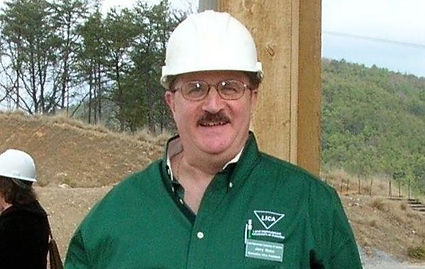
Farewell to the Godfather of LICA
For more than two decades, Jerry Biuso, Sr. was the face of the Land Improvement Contractors of America. To many, he’ll always be the “Godfather of LICA,” a nickname born from his unmistakable personality, his Jersey confidence, and the way he looked after this association as if it were his own family.
NEPA Streamlining Legislation Moves Forward
On November 20, the House Committee on Natural Resources passed the Standardizing Permitting and Expediting Economic Development (SPEED) Act, to reform the permitting and judicial review process for construction projects subject to the National Environmental Policy Act of 1969 (NEPA).

Limits on EQIP and Conservation Funding Lifted
Agripulse reports that federal conservation funding through the Environmental Quality Incentives Program (EQIP) and the Conservation Stewardship Program (CSP) will no longer limit how much farmers can receive. The continuing resolution (CR), passed by Congress before the Thanksgiving holiday, funds through Jan. 30 those parts of the government not covered by three agency specific appropriations bills approved as part of the CR legislation.

From the ADMC: Putting Farms First, Streamlining Delivery
The Agricultural Drainage Management Coalition (ADMC) met with the Natural Resources Conservation Service (NRCS) chief Aubrey Bettencourt on Friday, Sept. 26 to discuss strategies for maximizing the effectiveness of the recent Memorandum of Understanding (MOU) between the two organizations.